


* Last updated on August 14, 2026.
- Requirements
- Download & Install
- Export/Import Joomla articles
- Export/Import User data
- Export/Import the module configuration
Requirements
- Joomla version: 3 to 6
- PHP:
- PHP Extensions: ZIP Library
- PHP: [magic_quotes_gpc = Off]
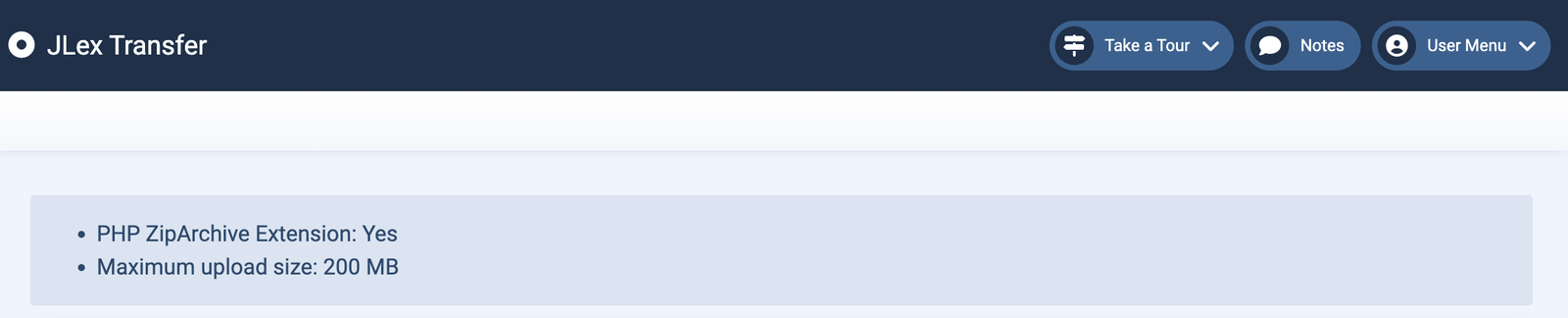
* The header section of JLex Transfer displays information about these parameters. Ensure that it is enabled and that your file size does not exceed the displayed limit. If the size exceeds the threshold, you can adjust this value in the server's PHP configuration.
Download & Install
Apply for new installations & upgrades. Before proceeding, always remember to BACKUP your site first.
Get the latest version of the JLex Transfer at the download page: https://www.jlexart.com/downloads
At the admin section of your website, follow these steps:
- Joomla 3: Extension > Manage
- Joomla 4 to 6: System > Install > Extensions
Select Upload Package File tab > Select the downloaded file to install.
Export/Import Joomla articles
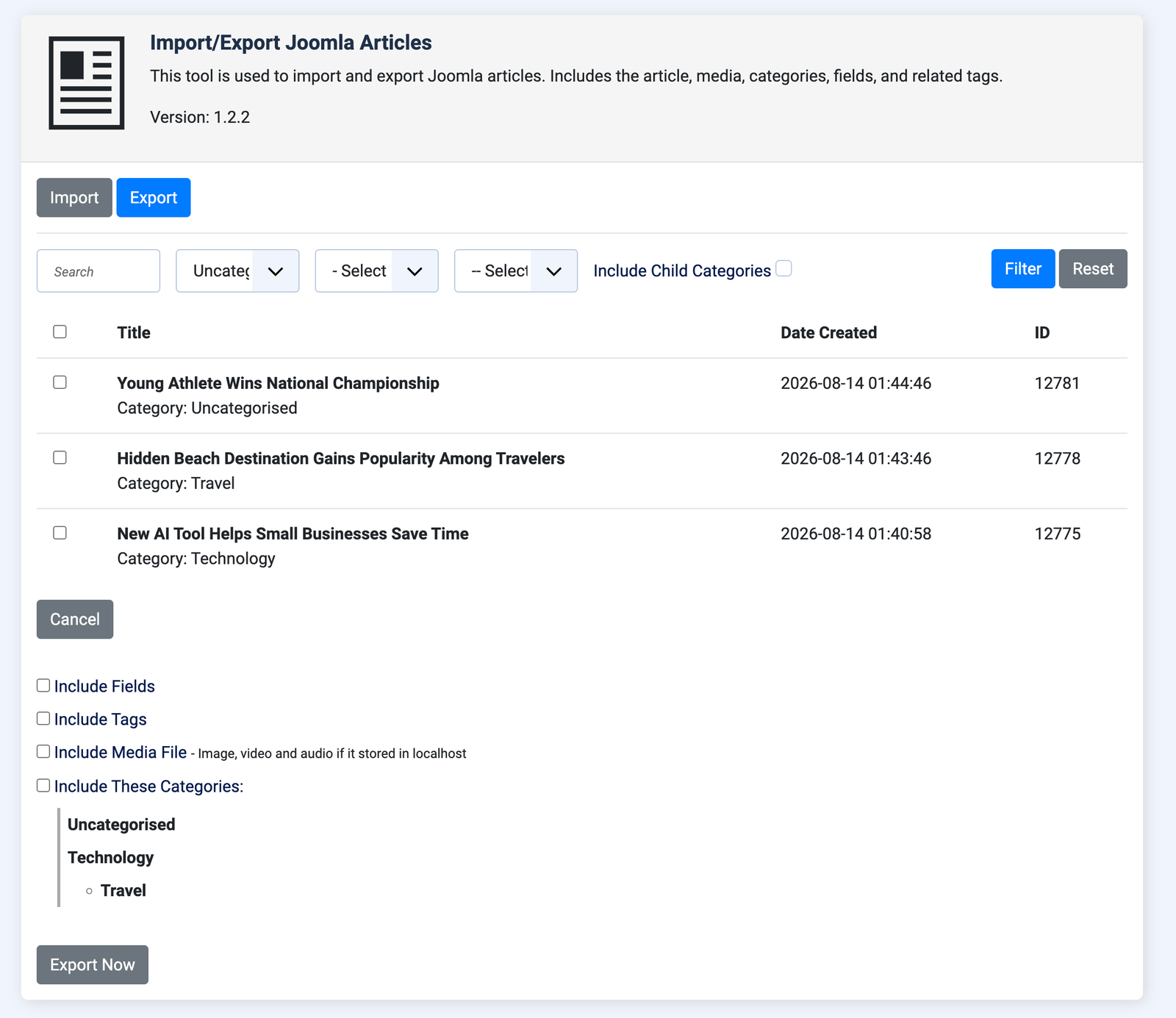
You can back up selected articles or articles based on the current filter. To get started, go to Import/Export Joomla Articles > Export.
- Click "Export Items Selected" to back up the selected articles.
- Click "Export All" to back up the articles based on the current filter
Filters include:
- Query: Find articles based on the phrase typed.
- Category: Find articles in a category (can include subcategories)
- Featured: Find featured articles.
- Status: Find articles based on its status: Published, Unpublished, Trashed.
You will then be asked if you need to back up the following:
- Media: The images, video or audio found in the article. Note that these multimedia files must be hosted on your website.
- Categories: Back up the categories of articles. Later when importing data, these categories will automatically be created and linked to the above articles.
- Fields & Field groups
- Tags
Once the data export is complete, click "Download the backup file." to download the compressed file.
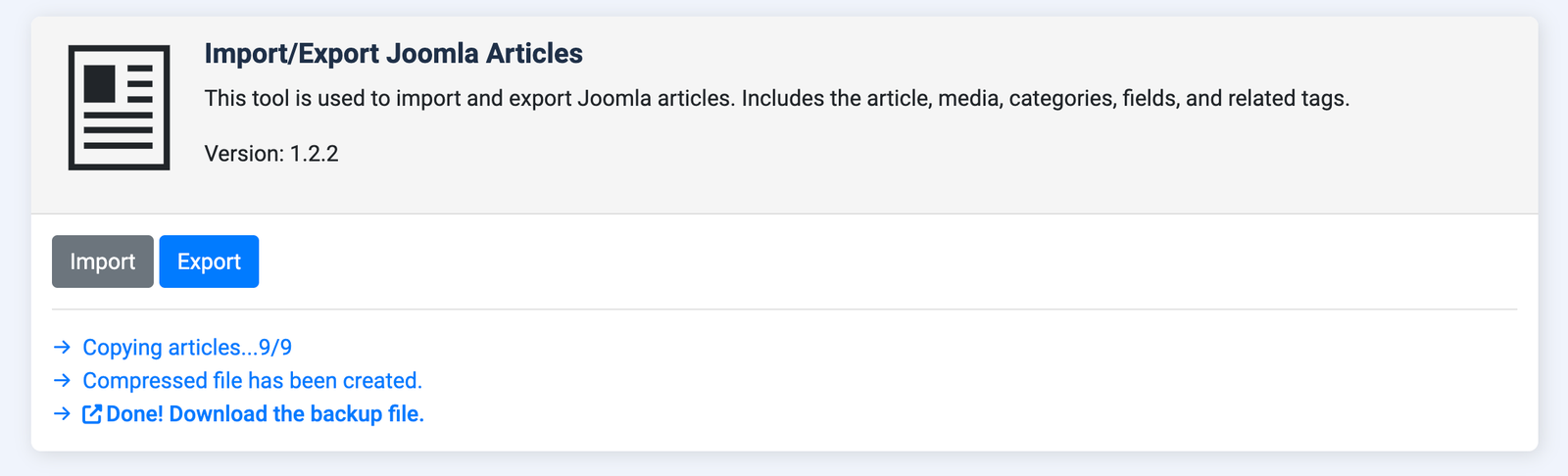
This compressed file is used to restore (in case the website loses articles for some reason) or to copy these articles to a new website.
To get started, go to Import/Export Joomla Articles > Import.
If the compressed file is large (cannot be uploaded by the usual method), you can upload through via FTP or the hosting's File Manager. After upload, select "Import from File" instead of "Upload Package File"
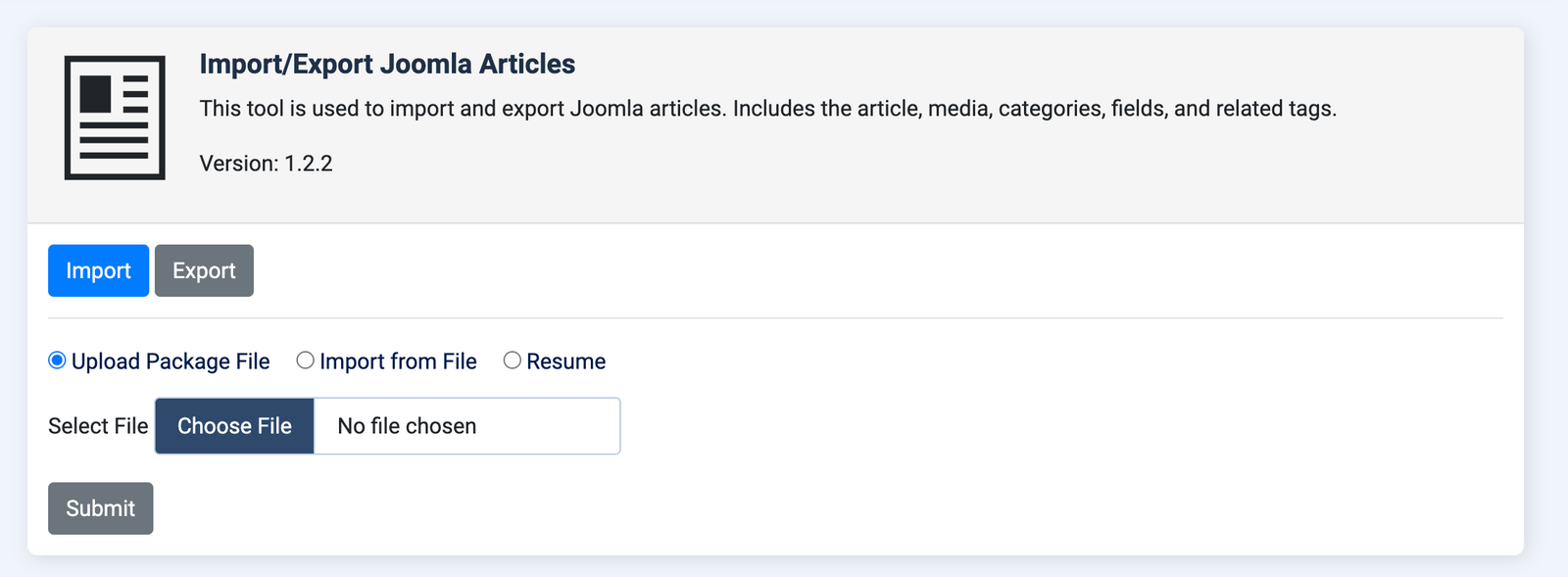
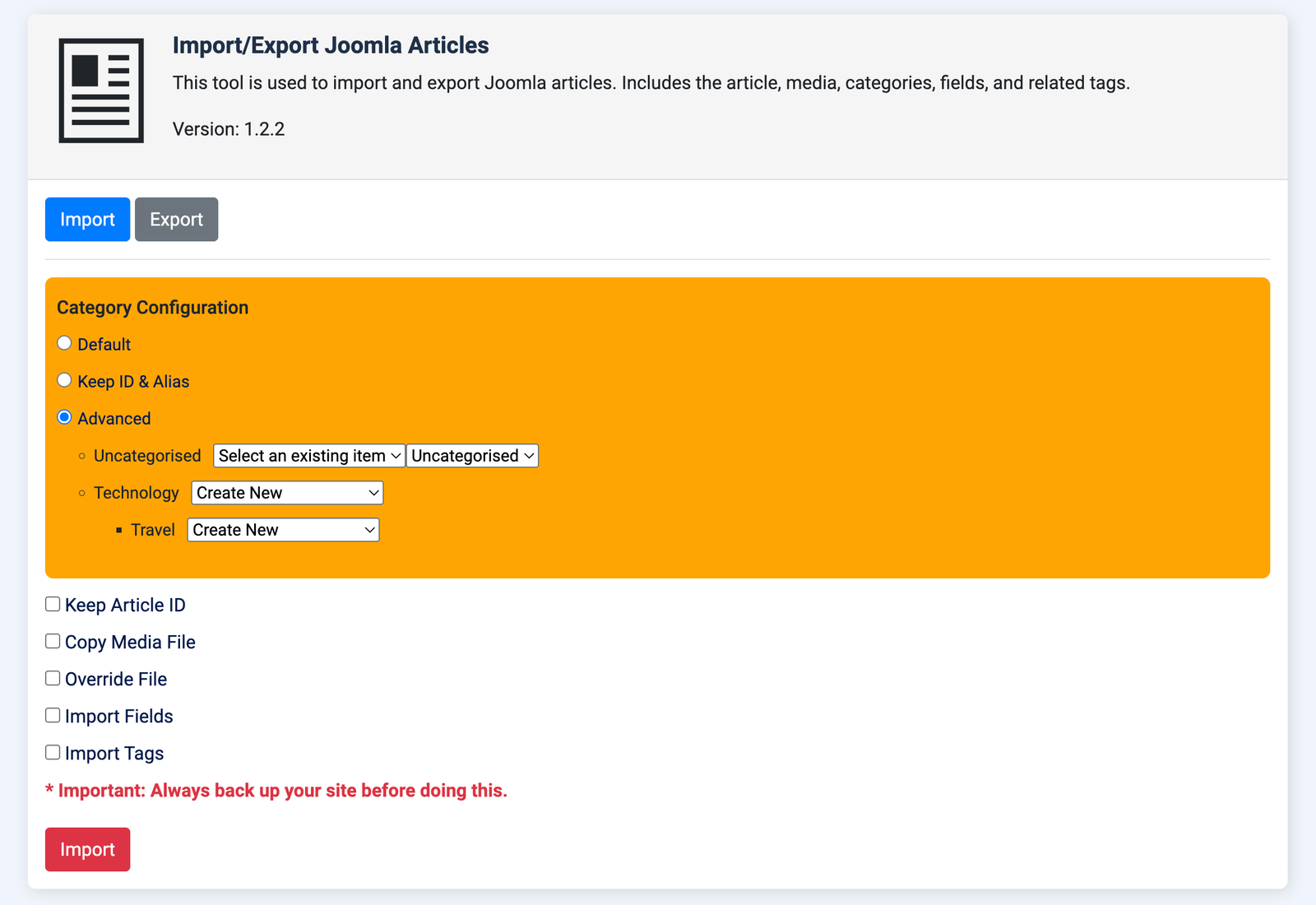
After the file is uploaded, the system will display the available options (if any):
- Keep Article ID: Keep the post's ID. In case this ID already exists, the imported article will use the new ID.
- Category Configuration: Import categories in the source website. These categories will automatically link to articles on the new website after being imported.
There are three options you can apply:- Automatic Try to find a category based on its name. If one exists, it will be automatically assigned to the existing category; otherwise, a new one will be created.
- Keep ID & Alias If the category ID or alias already exists in the system, a new one will be created with a random ID and alias.
- Advanced It will be based on manual settings for each category.
- Copy Media File: Select it if the compressed file contains images, videos or audio and you want to copy it.
- Override File: Overwrite existing files.
In some cases, the data entry process may be interrupted (e.g., due to processing timeouts or being logged out); you can resume the process.
When importing data, pay attention to the Code ID parameter and the number of completed articles.
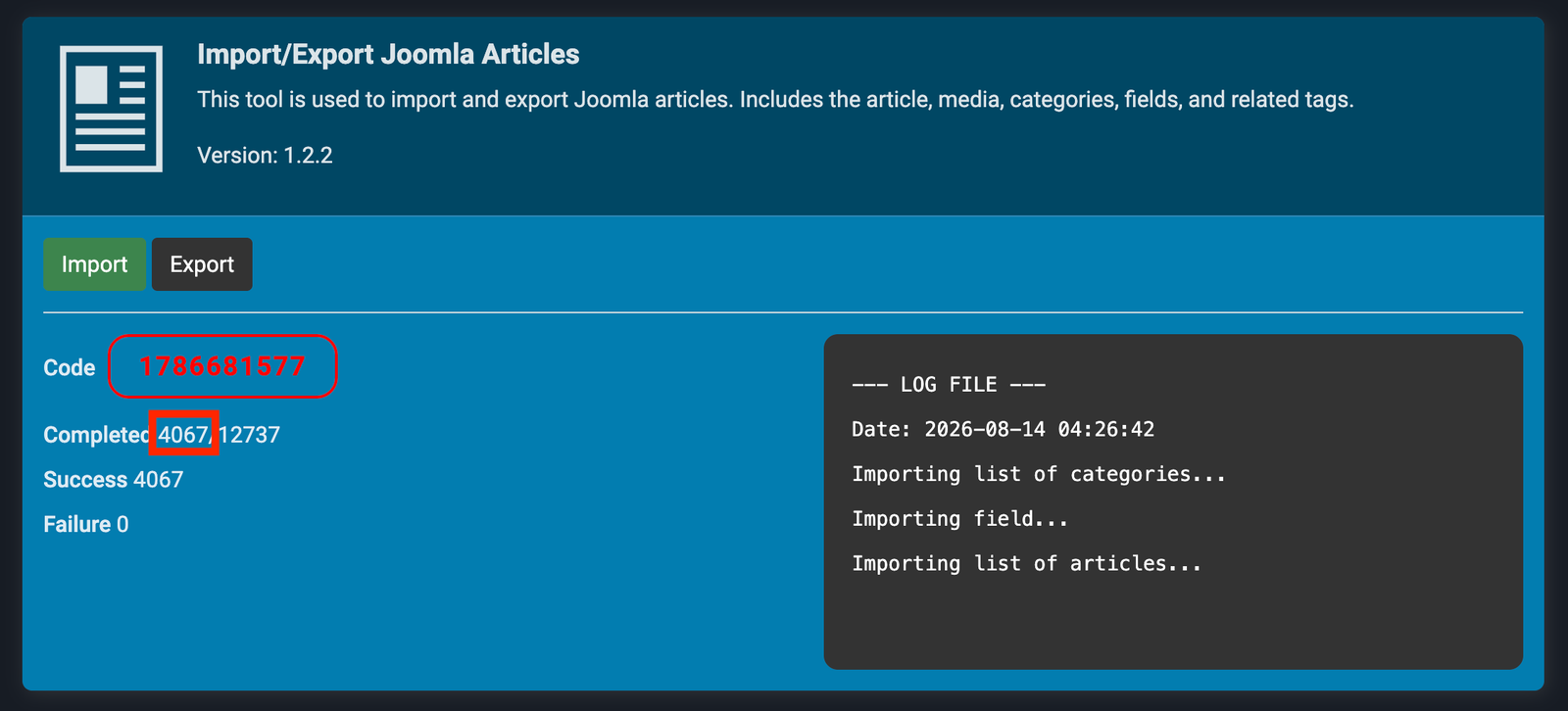
Next, go back to "Import/Export Joomla Articles" > Import > Resume. Enter the Code ID. For the "Start from article number" field, take the number of articles already imported and subtract 1.
Export/Import User data
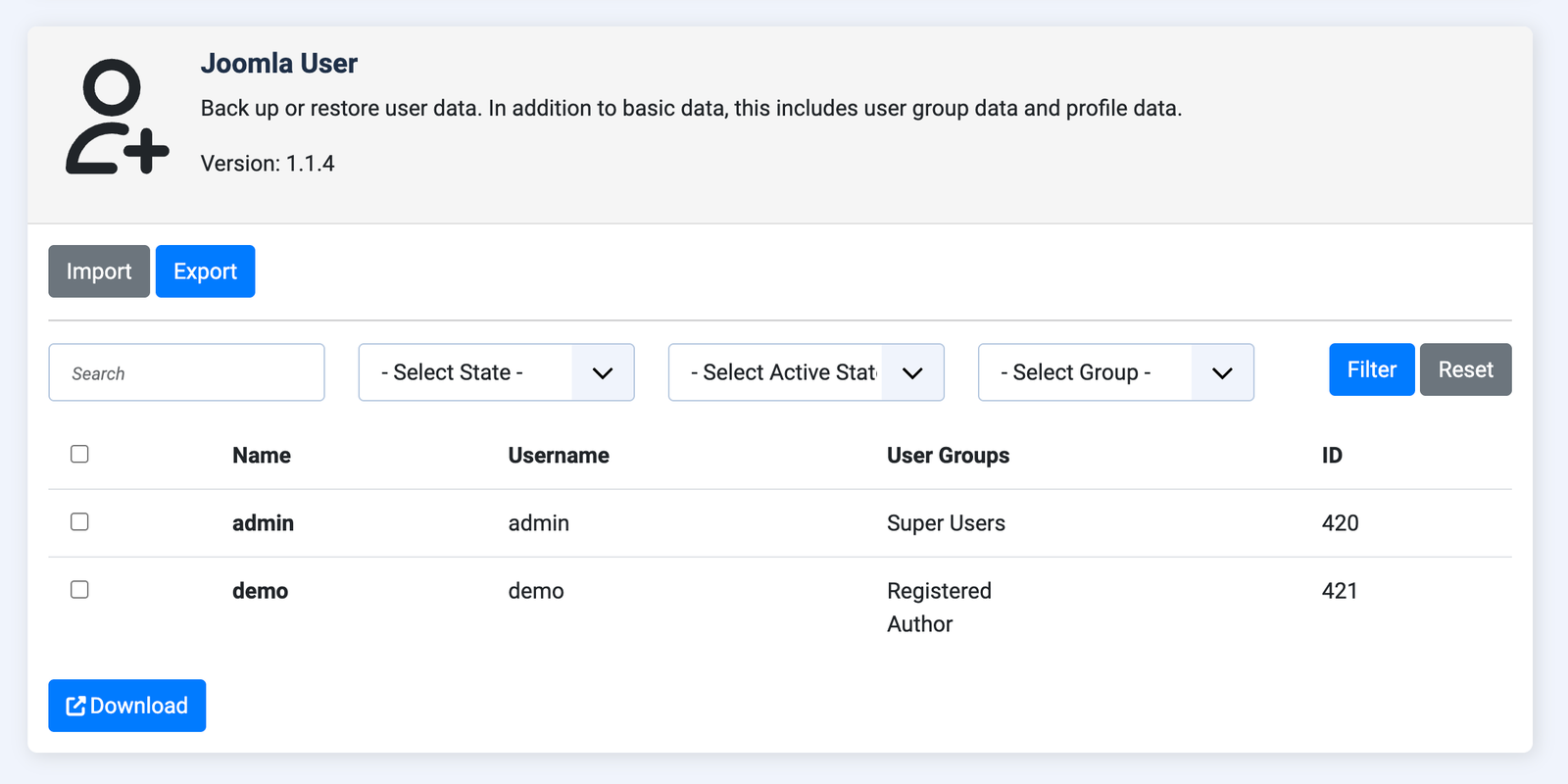
Similar to article data export, this tool helps you to export user data on the current website.
- Click "Export Users Selected" to back up the selected users.
- Click "Export All" to back up the users based on the current filter
Filters include:
- Query: Find members based on the phrase typed.
- Group: Find members based on user groups.
- Status: Find members based on its status: Enabled, Disabled.
After the data export is completed, click the "Download" button to download the compressed file.
Similar to the article, once you have the archive, you can restore or copy the user list to the new website.
After selecting the file, click the "Check" button to let the system analyze the file.
Then a list of user groups will be displayed for you to reconfigure.
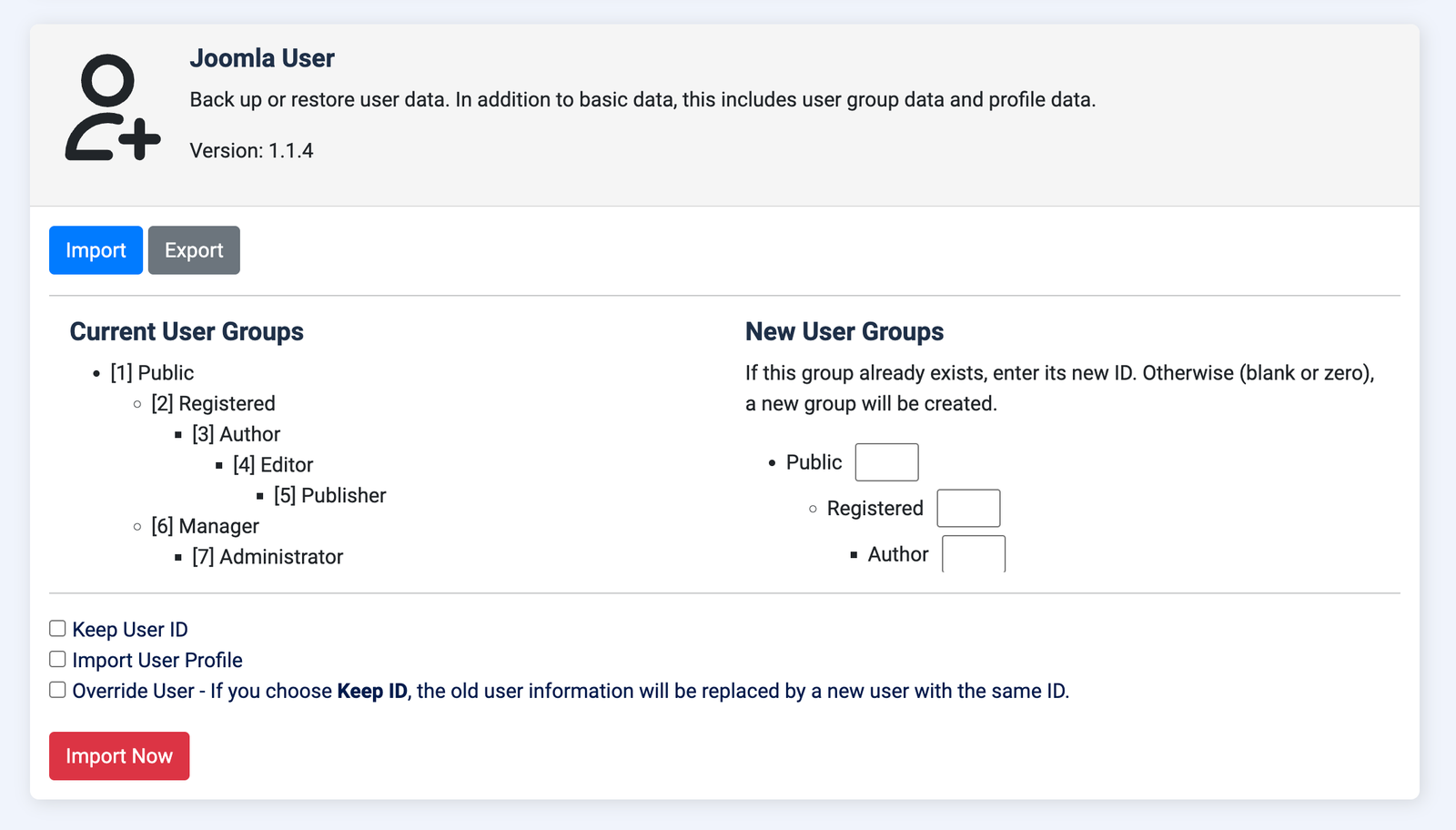
In case the user group already exists, enter the ID of that group. If left blank, or zero, the extension will create a new user group.
You also have the following options:
- Keep User ID: Keep the user's ID, in case the ID already exists and don't select "Override User", a new ID will be generated.
- Import User Profile: Enable it if you are activating the User - Profile plugin.
- Override User: If you choose Keep ID, the old user information will be replaced by a new user with the same ID.
Finally, click the "Import Now" button to restore or import user data.
Export/Import the module configuration
Backup or copy the settings of any module. This tool saves you time in setting up the module on a new website.
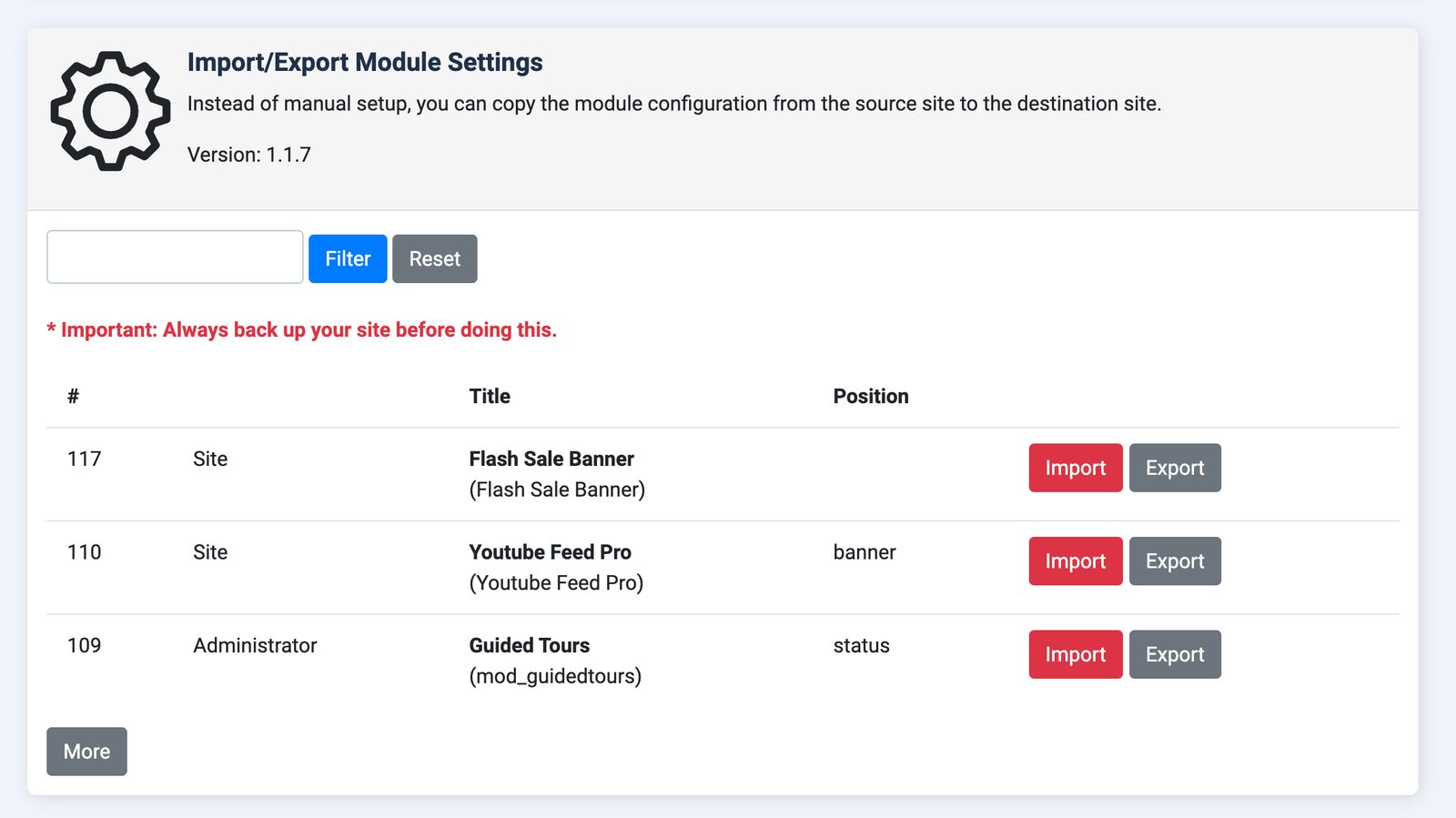
For example you have an image presentation module, in the setup you need to declare the image gallery, related settings like effects, styles... It is running perfectly and now, you want "copy" this module to a new site. JLex Transfer will help you set it up quickly.
Install JLex Transfer on both websites. On the source website, select Import/Export Module Settings > "Select image presentation module" > Export > Save the configuration file.
On the destination website, after installing this photo presentation module, go to JLex Transfer > Import/Export Module Settings > Select image presentation module > Import > Select the above configuration file > Done.